 Indraprastha Education Group
What Is the Best Strategy to Crack the CUET Exam in Your First Attempt Without Coaching?
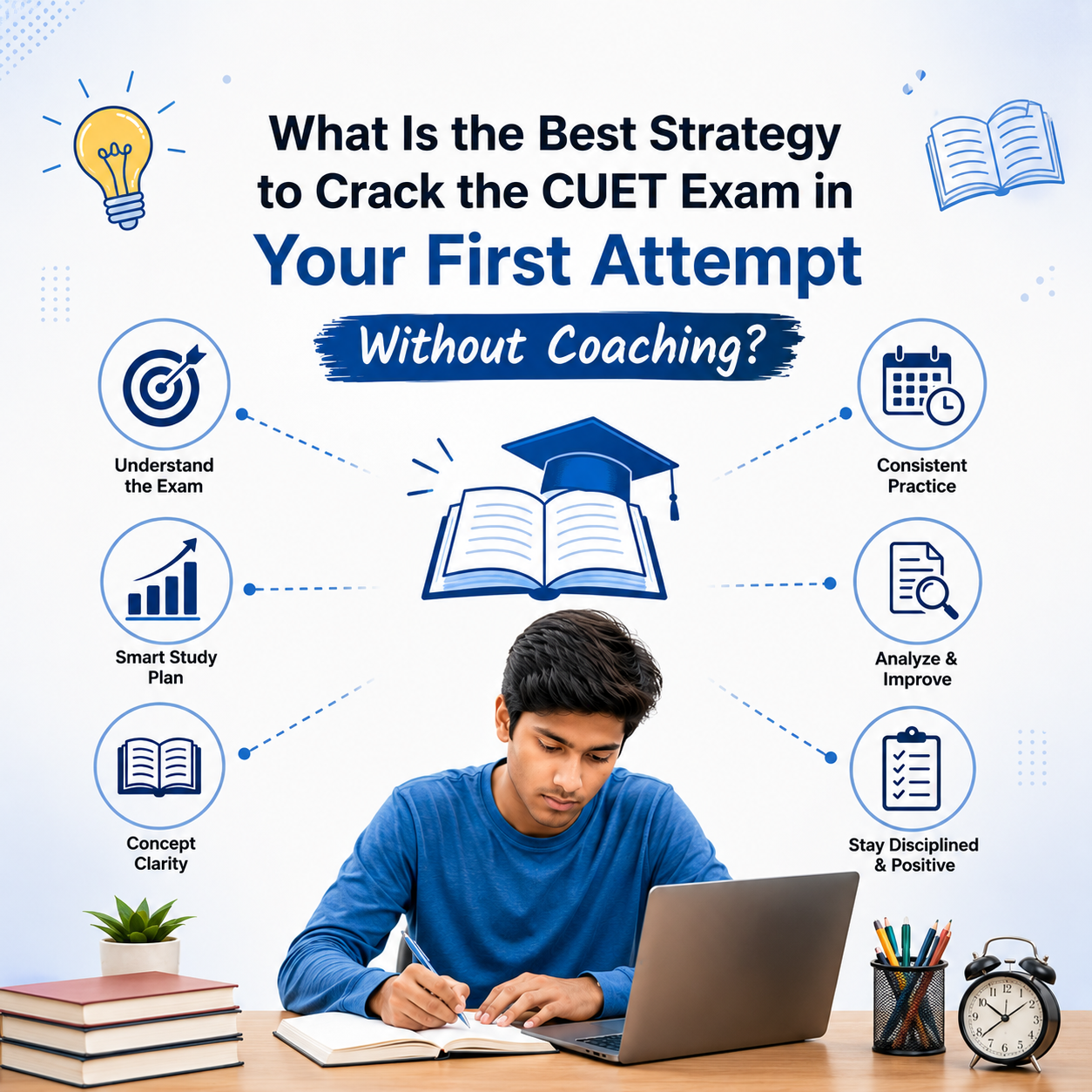
What Is the Best Strategy to Crack the CUET Exam in Your First Attempt Without Coaching?
- Exams
- June 11, 2026
The preparation of entrance exams is a stressful process, particularly when it is seen that the other students around you are going to costly coaching institutes. Many students begin to think that they will not be able to pass if they do not get coaching in the classroom, study a lot or have a lot of study material.
But, in reality, it's not always the case.
A lot of students crack competitive exams through self-study every year. The real challenge is not coaching. It is being consistent, focused and knowing how to study smartly and not endlessly.
The Cuet exam has emerged as a crucial exam for students aiming for admission in leading universities and professional courses. Students are expected to do well at the first try of course. However, proper strategy, diligent study techniques and a steady approach can make studying from home an achievable goal.
When it comes to cracking CUET, one of the most common questions that students ask is, “Can I crack CUET without coaching?” At IP Education, many students have this question in their mind that often recurs. Yes - but with a practical and realistic attitude towards preparation.
Understand the Exam Before You Start Studying
This sounds basic, but many students skip this step completely.
Before solving mock tests or buying books, take time to understand:
- The exam pattern
- Subjects included
- Marking scheme
- Time limits
- Previous year question trends
Without this understanding, students often study random topics and waste valuable time.
One student I knew spent weeks studying chapters that rarely appeared in the actual paper. Later, he realized he ignored important high-weightage sections completely.
That’s why planning matters first.
The good thing about CUET preparation is that most questions are based on concepts students already studied in school. So instead of learning everything from scratch, students mainly need revision, practice, and speed improvement.
Build a Realistic Daily Routine
A lot of students create impossible schedules after watching motivational videos online.
Study 12 hours daily.
Wake up at 4 AM.
No breaks.
No social life.
Honestly, most people can’t maintain that routine for long.
Instead, build a timetable that actually fits your lifestyle.
If you’re attending school or college classes, even 3–4 focused hours daily can be enough when used properly.
A simple routine may include:
- Morning revision sessions
- Short practice tests
- Evening concept study
- Weekend mock exams
Consistency matters more than dramatic study plans.
One student preparing at home used to study only three hours daily because he also managed family responsibilities. Initially, he felt guilty seeing others study longer hours. But over months, his regular habit gave him stronger preparation than many students who studied irregularly.
Small daily effort creates big results slowly.
Focus More on Concepts Than Memorization
This is where many students struggle.
They try memorizing answers instead of understanding concepts properly. That approach usually creates problems during tricky questions or time pressure.
Strong basics matter much more.
Students should focus on:
- Understanding NCERT concepts
- Improving reading comprehension
- Strengthening reasoning ability
- Practicing numerical questions regularly
Honestly, clear understanding reduces exam fear too.
For example, students preparing for commerce or computer-related programs often search for admission opportunities in good BCA colleges in delhi through CUET scores. In such cases, accuracy becomes extremely important because competition can be high.
And accuracy comes from understanding, not just memorizing shortcuts.
Mock Tests Are More Important Than Students Think
Reading chapters feels comfortable because there’s no pressure involved. But real exams are different.
You must:
- Solve quickly
- Stay calm
- Manage time
- Avoid panic
That’s why mock tests matter so much.
Initially, scores may disappoint you. And honestly, that’s normal.
Many students avoid mock tests because low marks hurt their confidence. But mistakes during practice actually help improve final performance later.
After every mock test, ask yourself:
- Which section took too much time?
- Where did silly mistakes happen?
- Which topics need revision?
- Did nervousness affect concentration?
One student improved mainly because he stopped chasing difficult questions first. During mock analysis, he realized he wasted time trying to solve everything perfectly. Once he learned question selection, his scores improved naturally.
Sometimes exam success depends more on strategy than intelligence.
Don’t Depend on Too Many Resources
This is one of the biggest mistakes students make now.
The internet is filled with:
- YouTube channels
- Telegram groups
- PDFs
- Online notes
- Multiple test series
Students keep collecting material instead of actually studying.
Too many resources create confusion.
It’s honestly better to choose:
- One trusted book per subject
- NCERT revision
- One mock test source
- Limited online guidance
That’s enough for most students.
Simple preparation usually works better than trying to follow ten different teachers at once.
Your brain also needs clarity.
Take Care of Your Mental Health During Preparation
Competitive exam preparation can become emotionally exhausting after some time.
Some days you’ll feel motivated.
Some days you won’t want to study at all.
That’s normal.
Students often think successful preparation means staying productive every single day. But real preparation is messy sometimes.
Take breaks when needed.
Sleep properly.
Go for walks.
Talk to friends occasionally.
Burnout reduces focus badly.
One student shared how he improved only after reducing pressure on himself. Earlier, he studied continuously without rest and became mentally tired. Once he balanced study with short breaks and proper sleep, concentration improved much more.
A healthy mind studies better.
A Real-Life Example
Riya was preparing for CUET at home without coaching. Initially, she felt nervous because most of her classmates had joined expensive institutes.
She tried watching too many online lectures and became completely confused after a few weeks.
Later, she simplified everything.
She focused on:
- NCERT revision
- Daily practice questions
- Weekly mock tests
- Short notes for revision
That simple routine helped her stay consistent without feeling overwhelmed.
Her first mock scores were average. But after regular practice for several months, her confidence improved steadily.
What helped her most wasn’t fancy coaching. It was regular effort and a calm approach.
And honestly, many successful students follow a similar path.
Final Thoughts
Yes, one can crack the Cuet exam, even after the first attempt, without taking any coaching. Sometimes it's not as simple as it sounds, particularly when those around you seem ready or confident. But, if students are disciplined and focused, self-study can be effective.
There is no need for flawless routines or high-priced classes.
The crucial issue is:
- Understanding the syllabus
- Studying consistently
- Practicing mock tests
- Revising regularly
- Staying mentally balanced
Sometimes preparation can be frustrating. There may be some bad mock tests. However, things do move forward in the background.
But competitive exams are not just about knowledge at the end of the day. They also challenge patience, concentration and confidence.
To be honest, those qualities help students, even after the exam result.
Read Also: Top 10 Common Mistakes Students Make During CUET Preparation and How to Avoid Them
Comment



Subscribe to Our Newsletter!
At IP Education, we believe that the journey toward higher education should be exciting, transparent, and stress-free. As a leading platform dedicated to simplifying college search and selection, we empower students, parents, and counselors to make informed decisions about the best educational opportunities available.

Share This News